
What Makes a Great Show Home? 7 Design Decisions That Help Buyers Connect With a Property
A good show home needs to do more than look beautiful.
It needs to help someone walk through the door and immediately understand how the property could work for them. The rooms need to feel inviting, the layout needs to make sense and, importantly, the house needs to feel like somewhere a buyer could genuinely imagine living.
For developers creating show homes in Rugby, Warwickshire and the surrounding areas, the interior is an important part of how the property is presented. Thoughtful interior design can help demonstrate the potential of a space, give a development its own identity and create a much stronger first impression.
Here are seven of the design decisions we think make the biggest difference.
1. Start with the person who is likely to buy the property
Before choosing paint colours, furniture or fabrics, it is important to understand who the home is actually being designed for.
A three-bedroom family home needs to be presented differently from an apartment aimed at young professionals or a larger property likely to appeal to downsizers.
That doesn't mean designing an overly specific interior that only appeals to one type of person. It is about understanding how the likely buyer will want the property to function.
For example, does a spare bedroom work better as a child's room, guest room or home office? Is the kitchen likely to be the main social space? Does a large hallway need furniture to help buyers understand its scale?
These decisions help the property feel relevant rather than simply decorated.
2. Make the layout immediately understandable
An empty room can often feel smaller than it really is.
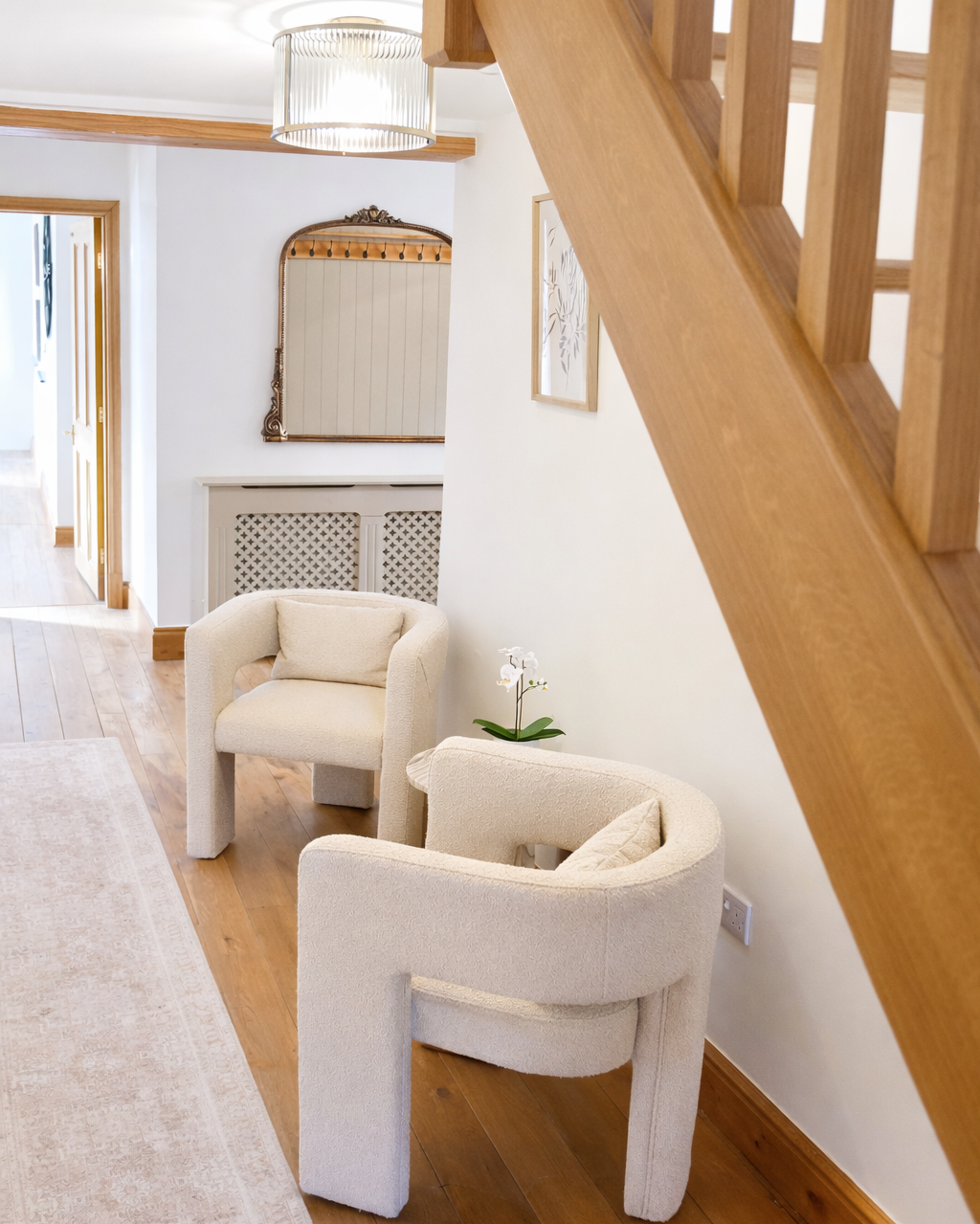
Furniture gives buyers a sense of scale and helps them understand how a space can be used.
This is particularly important in rooms where the layout isn't immediately obvious.
A carefully considered furniture plan can show that a living room comfortably accommodates a full seating arrangement, that there is space for a dining table as well as an island, or that a bedroom can take a substantial bed without feeling cramped.
Sometimes relatively small decisions can completely change the way someone experiences a room.
For us, furniture planning is therefore one of the earliest parts of the process rather than something added at the end.Make it stand out
Whatever it is, the way you tell your story online can make all the difference.
3. Give the property some character
One of the challenges with a brand-new property is that it can naturally feel quite neutral.
Neutral isn't necessarily a problem. In fact, a show home normally needs to appeal to a broad audience. But neutral doesn't have to mean bland.
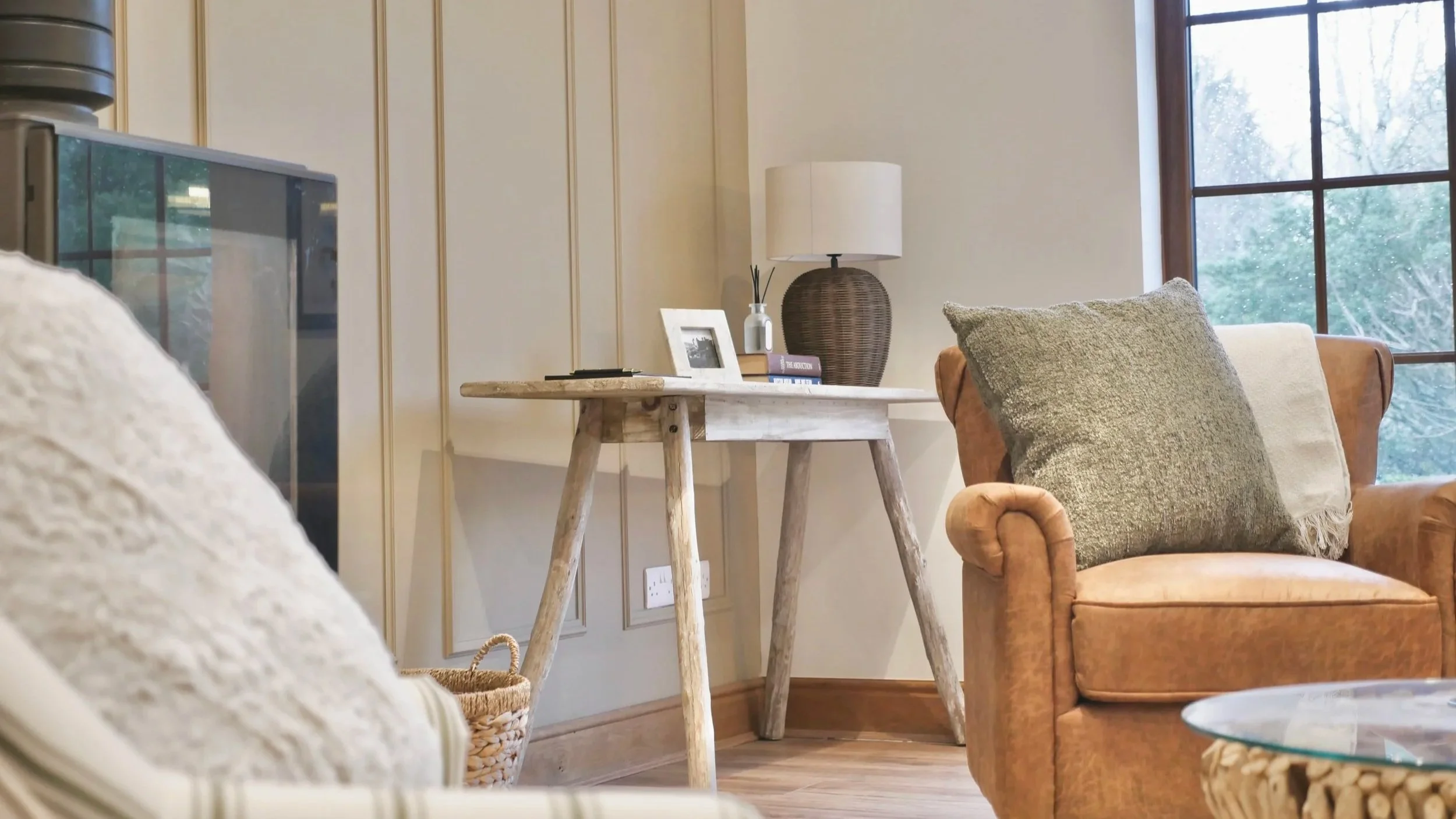
Texture, artwork, lighting, joinery, natural materials and carefully chosen furniture can add warmth and personality without making the scheme too taste-specific.
We often prefer interiors that combine contemporary pieces with elements that feel slightly more collected: an interesting occasional chair, a vintage-inspired piece of furniture, artwork with character or a more unusual lamp.
The aim is to create a home that feels established and considered rather than like a furniture showroom.
4. Create moments buyers remember
Not every part of a show home needs to demand attention.
In fact, if every room contains a statement feature, the overall scheme can quickly feel over-designed.
Instead, it is often more effective to choose a small number of moments that give the property its identity.
That could be a beautifully designed entrance, a strong dining area, a fitted window seat, an interesting headboard, a carefully styled kitchen or a particularly inviting main bedroom.
These moments help give buyers something to remember after viewing several properties.
The rest of the interior can then sit more quietly around them.
5. Balance aspiration with real life
A show home should feel aspirational, but it should still look believable.
Rooms that are excessively styled or filled with impractical furniture can actually make it harder for a buyer to imagine themselves living there.
We prefer to show how the house could function in real life.
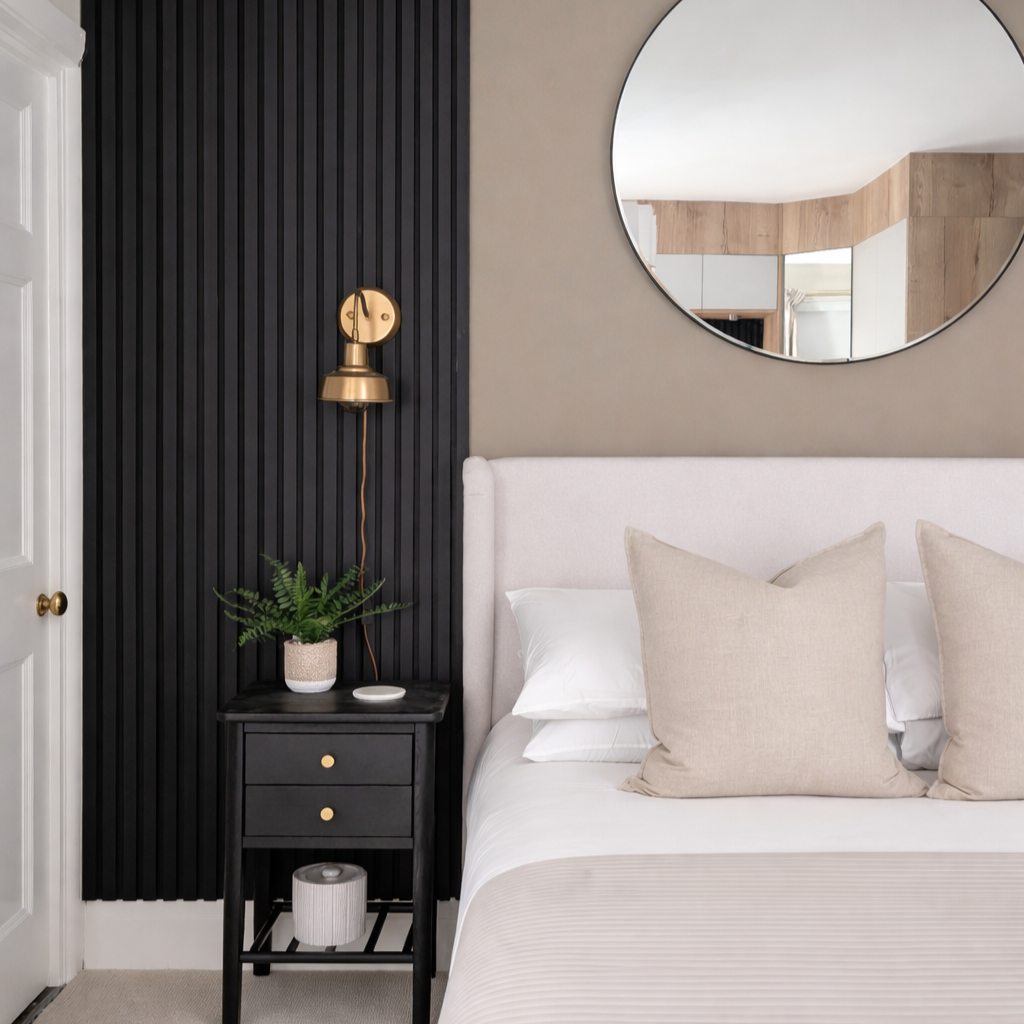
That means including enough furniture to make each room useful, considering storage, allowing sensible circulation space and creating areas that feel comfortable rather than simply photographic.
A family room should feel somewhere a family could actually spend an evening. A home office should be practical enough to work from. A dining room should look like people could genuinely sit down and use it.
Good show home design is both practical and beautiful, which is also a principle we carry through our residential and commercial work.
6. Pay attention to lighting, texture and the smaller details
It is often the layers within a room that make a finished show home feel noticeably different.
Curtains hung properly can make ceilings appear taller. The right rug can define a seating area. Table lamps soften a room in the evening. Artwork can help balance a large wall. Cushions and throws introduce texture without relying heavily on colour.
Lighting is particularly important.
Relying only on ceiling lights can make even a well-designed room feel flat. A combination of ceiling lighting, lamps and decorative lighting helps create depth and makes the property feel warmer and more inviting during viewings.
These details may seem small individually, but together they are what make an interior feel complete.
7. Design for photography as well as viewings
For many buyers, their first experience of a development won't be walking into the show home.
It will be online.
That means the interior also needs to photograph well.
Clear focal points, balanced furniture layouts, layered materials and thoughtful styling all help create stronger marketing photography.
There is a balance here too. Designing purely for photographs can result in rooms that don't work particularly well when someone actually visits.
The best schemes achieve both: they look strong in marketing imagery while still feeling natural and comfortable when experienced in person.
Show home interior design in Rugby and Warwickshire
A successful show home should help buyers understand the property, not distract from it.
Our approach at The Barn Interiors is to create complete interiors that feel warm, timeless and considered while always keeping the commercial purpose of the project in mind.
We can work with property developers in Rugby, Warwickshire and surrounding areas from the early design stages through to furniture sourcing, ordering, installation and final styling, depending on the level of support required. Our wider service is designed to manage as much or as little of the interiors process as the client needs.
If you're planning a new development or have a show property that needs furnishing and styling, tell us about your project.
